Air purifier
Coway AP-1512HH
Best Air purifier – High-End – 200 $ to 400 $
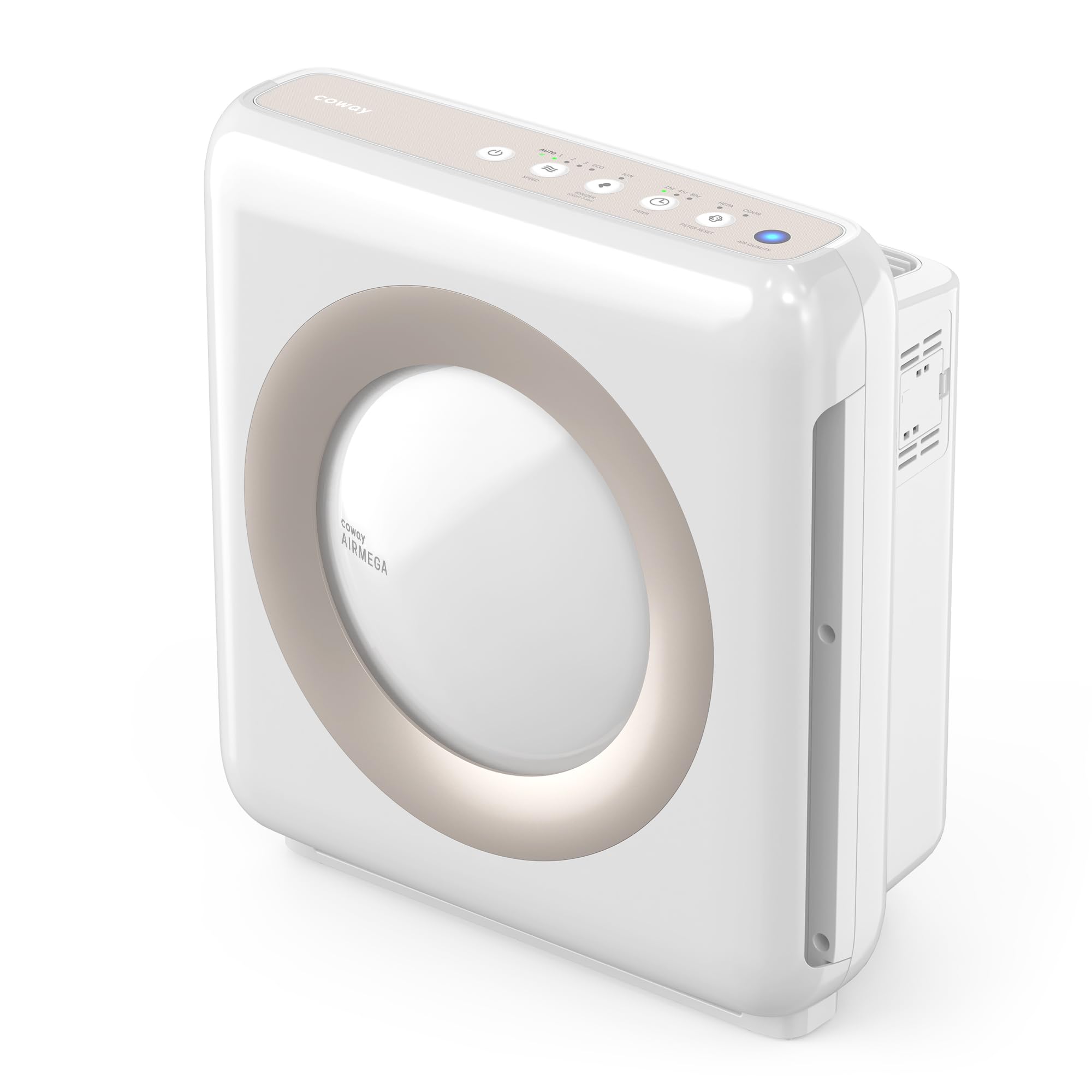
The Coway AP-1512HH is our High-End pick for a bedroom, condo, or medium-sized living space where clean air and quiet operation matter. Buyers describe clear air improvements, easy controls, and a useful automatic mode. Published tests also found strong particle-cleaning performance, while the lower settings remain discreet enough for everyday use.
A quiet purifier for everyday rooms
Buyers repeatedly describe the AP-1512HH as quiet on its lower settings and easy to live with in a bedroom or condo. One verified buyer said it was barely audible at low to medium speed; another used it in a 600-square-foot condo and left it on Auto or Eco. The same buyer found the washable pre-filter useful for catching dust and hair before they reach the main filters.
The automatic mode is a practical strength. Buyers say it increases fan speed after cooking and settles back down as the air clears. One buyer with pets said it handled cooking and pet odours quickly, while also praising the automatic function. Hunker likewise found that the purifier reacted well to sudden household pollution in its 24-hour test.
The Coway AP-1512HH is our High-End choice because the evidence combines strong particle-cleaning results with a quiet, usable day-to-day experience. Air Purifier First measured a 96% improvement in air quality after 60 minutes in a medium-sized test room and rated its purification performance highly. Live Science also found remarkable cleaning performance and discreet operation at lower settings. Buyers reinforce that picture: they report cleaner air, effective automatic adjustment, and comfortable low-speed use. It is a straightforward purifier rather than a connected one, but its core job is where it performs best.
Who it’s for For people with allergies, pets, or a bedroom or condo that needs dependable particle cleaning without a distracting low-speed hum.
What sets it apart
- Strong particle-cleaning results in Air Purifier First and Live Science testing.
- Quiet lower settings praised by buyers and noted by Live Science.
- Automatic and Eco modes make everyday use simple, according to buyers.
- A washable pre-filter helps catch larger dust and hair before the main filters, according to one buyer.
What to know
- Odour performance is mixed: some buyers report quick improvement, while others say it removes little odour. HouseFresh also found its impregnated carbon filter less effective against stubborn smells than a granular-carbon filter.
- It is louder at maximum speed, and Live Science noted that bright indicator lights can be intrusive in a bedroom at night.
What the tests add
Air Purifier First used a laser counter to assess fine particles, measured airflow and noise at several speeds, and found a 96% air-quality improvement in 60 minutes in a medium-sized test room. It also praised the motor and the adjustable air-quality sensor. Its reservation was higher electricity use at full power.
Live Science tested the purifier in a domestic setting over 30-minute cycles. It found strong capture of coarse and fine particles, with discreet operation at lower settings, but more noise at maximum speed. HouseFresh tested smoke removal and the carbon filter against cooking odours. It judged the purifier effective for its category and found the automatic mode performed well. Hunker ran it continuously for 24 hours with simulated cooking and smoke pollution and found the compact unit easy to use, though it described the automatic response as sometimes cautious during intense cooking events.
Frequently asked questions
Is the Coway AP-1512HH a good choice for allergies?
Air Purifier First and Live Science both reported strong particle-cleaning performance. Buyers also describe cleaner air and allergy relief, including fewer symptoms for one child with seasonal and dust-mite allergies. Those buyer reports are experiences, not medical evidence.
Is it quiet enough for a bedroom?
Buyers commonly praise the lower settings as quiet, and Live Science found the lower speeds discreet. Maximum speed is louder, and Live Science noted that the indicator lights may be too bright for some bedrooms at night.
Does the automatic mode work well?
Buyers say it raises the fan speed after cooking and slows as the air clears. HouseFresh found the automatic mode performed well. Hunker found the response could be cautious during especially intense cooking pollution.
How well does it remove odours?
The evidence is mixed. Some buyers report faster removal of cooking and pet odours, while others say it removes very little. HouseFresh found the impregnated carbon filter less effective against stubborn smells than granular carbon.