The right espresso machine depends less on a prestige label than on how much of the process you want to control. This selection moves from compact manual brewing to semi-automatic adjustment, assisted preparation and one-touch convenience, so you can choose the workflow that fits your mornings.
We chose the CASABREWS 3700 ESSENTIAL as the Budget espresso machine for a straightforward first step into ground-coffee espresso. Amazon buyers point to a useful combination: a compact counter presence, quick heating, easy operation, and hot espresso with crema. One buyer who moved away from pod coffee calls the espresso excellent and plans to buy another for a cabin. Tom's Guide also calls it an excellent entry point for small budgets, while its test found the steam wand capable and flexible. The main drawback is consistency: TechRadar found greater variation between shots and dripping after extraction. Choose this model for an affordable espresso-and-milk-drink routine, not fine control over every extraction.
The CASABREWS Ultra earns its place for home drinkers who want a semi-automatic route into espresso and milk drinks. Buyers often praise its overall quality and the coffee it produces, which supports its role as a flexible learning machine. The evidence is not uniform: TechRadar found the extraction underwhelming, while Homes & Gardens highlighted useful adjustment. Its real limit is that it does not guarantee consistent extraction without patient preparation and practice.
We chose the DE'LONGHI MAGNIFICA START for its combination of good coffee and uncomplicated operation. Buyers describe the coffee as excellent, and several say the machine is easy to use; one buyer specifically says milk drinks are easy with the wand and no extra dishes. That makes it a practical high-end choice for everyday bean-to-cup coffee and simple milk drinks, rather than for someone seeking a hands-on barista setup. The buyer feedback is not unanimous: reports include machines that stopped working or failed very early, and opinions are divided on value. Some buyers also find it noisy, while others say it is quieter than an older machine.
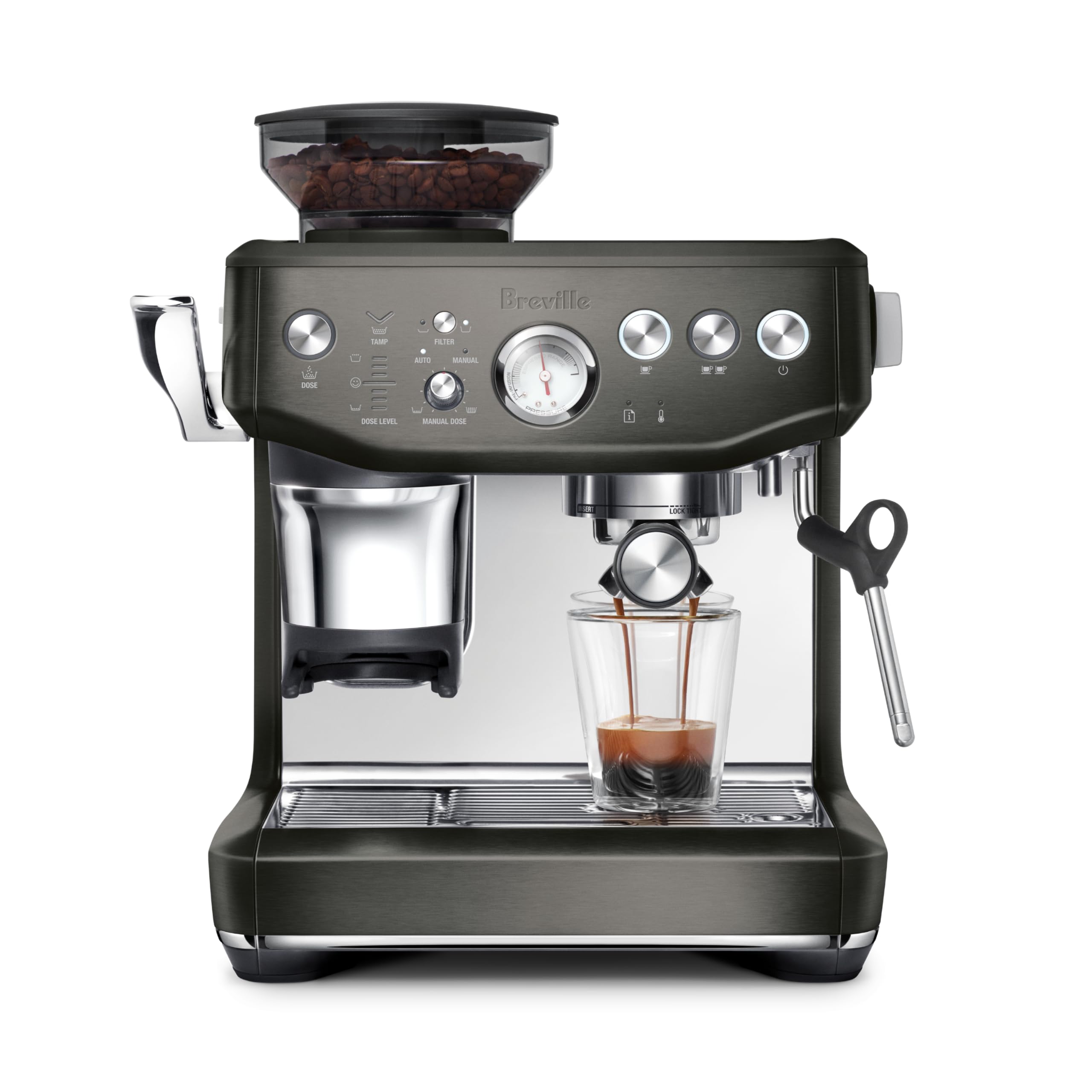
We chose the Breville Barista Express Impress as the Luxury espresso machine because it combines guided dosing and tamping with the control experienced home baristas still want. Buyers describe it as easy to set up and use, and they repeatedly praise the espresso, coffee taste and milk frothing. Several buyers also value the cleaner grinding workflow and the ability to adjust settings to their preferences. The trade-off reported by a few buyers is important: the steam wand is seen as the product's weak point, some call a plastic part on the portafilter fragile, and some consider the construction oversized. Those are buyer reports, not a general verdict on every machine.
We recommend the De'Longhi ECAM37095TI for people who want a wide choice of espresso and milk drinks with little hands-on work. Buyers repeatedly describe the machine as well made, easy to use, and capable of very good coffee. TechRadar found that it simplifies barista-style drinks at home, while Tom's Coffee Corner reported convincing espresso with good crema and effective milk foam. Its profiles and drink adjustments also help households that want different preferences without preparing each drink manually. The important trade-off is that the evidence is not uniform: some buyers report reliability or display failures, and temperature opinions are mixed. That makes it a strong fit for frequent, convenience-first use, not a risk-free choice for anyone who wants the simplest possible machine.
Five ways to make espresso at home
Start with the kind of morning you want. A compact machine such as the CASABREWS 3700 ESSENTIAL keeps the basic ritual visible: dose the coffee, lock in the portafilter and texture milk yourself. The CASABREWS Ultra adds an LCD interface, adjustable brewing temperature and a larger 58 mm portafilter for people who want to refine the recipe without moving to a full-size café setup.
The De'Longhi Magnifica Start takes a different route with an integrated grinder and automatic preparation. For a more hands-on but guided workflow, the Breville Barista Express Impress combines integrated grinding with assisted dosing and tamping. At the convenience-focused end, the De'Longhi Dinamica Plus is built around a touchscreen, automatic recipes and milk drinks. The product pages explain each machine's compromises; this page is the map between them.
Choose by the work you want to keep
How the machines differ in daily use
Workflow
What you control
Best fit
Compact manual
Grinding, dosing and milk texture
Small kitchens and first espresso setup
Adjustable semi-automatic
Temperature, dose, extraction and steaming
Learners who want room to practise
Automatic grinder
Drink selection and basic adjustments
Fast bean-to-cup preparation
Assisted manual
Grinding with guided dosing and tamping
Hands-on brewing with less mess
Fully automatic
Drink choice and personal settings
Convenience, including milk drinks
The practical differences
A manual steam wand gives you more control over milk texture, but it also makes technique part of the routine.
An integrated grinder saves counter space and removes a separate purchase, while grind adjustment still matters for the cup.
Guided dosing and tamping reduce repeatable mistakes without turning the machine into a one-button appliance.
Automatic milk systems favour consistency and convenience over the tactile part of espresso preparation.
Whichever route you choose, cleaning the portafilter, brew path, grinder and milk components is part of ownership.
Questions to settle before buying
Frequently asked questions
Should a first espresso machine have a built-in grinder?
It can simplify the setup and save counter space, especially if you want fresh beans without buying a separate grinder. A separate grinder gives you more freedom to upgrade each part independently, so the better choice depends on whether simplicity or modular control matters more.
Is a manual steam wand difficult to learn?
There is a learning curve: you need to position the wand, introduce air briefly and then create a smooth whirlpool in the milk. That effort is worthwhile if you enjoy practising latte texture; if you want a repeatable milk drink with fewer steps, an automatic milk system is the more relaxed option.
What should I compare beyond the machine's headline specifications?
Look at the workflow, cleaning access, grinder adjustment, portafilter format, milk system and the space around the water tank. Those details affect every morning, while a single pressure number tells you very little about how easy the machine will be to live with.